

Electrical maintenance is one of the simplest ways to keep a home safe, reliable and ready for modern living. It helps spot wear, damage or outdated components before they become a more serious concern.
If you are booking a residential electrician, it is useful to know what they are looking for. This guide explains the main checks a qualified professional carries out, without turning it into a DIY task.
Why electrical maintenance matters at home
Home electrical systems work hard every day. Cooking appliances, heating controls, lighting, home offices, chargers and smart devices all depend on circuits doing their job safely. Over time, accessories can loosen, insulation can deteriorate, protective devices can age and changes to the property can place different demands on the installation.
Professional electrical maintenance is designed to check the condition of the fixed installation and highlight anything that needs attention. It is not simply about whether the lights turn on. A qualified electrician considers safety, reliability, suitability and compliance with current expectations.
For homeowners arranging residential electrical work, maintenance can also be a helpful starting point before adding new circuits, upgrading a consumer unit, installing outdoor power or preparing for low-carbon technology.
The consumer unit and protective devices
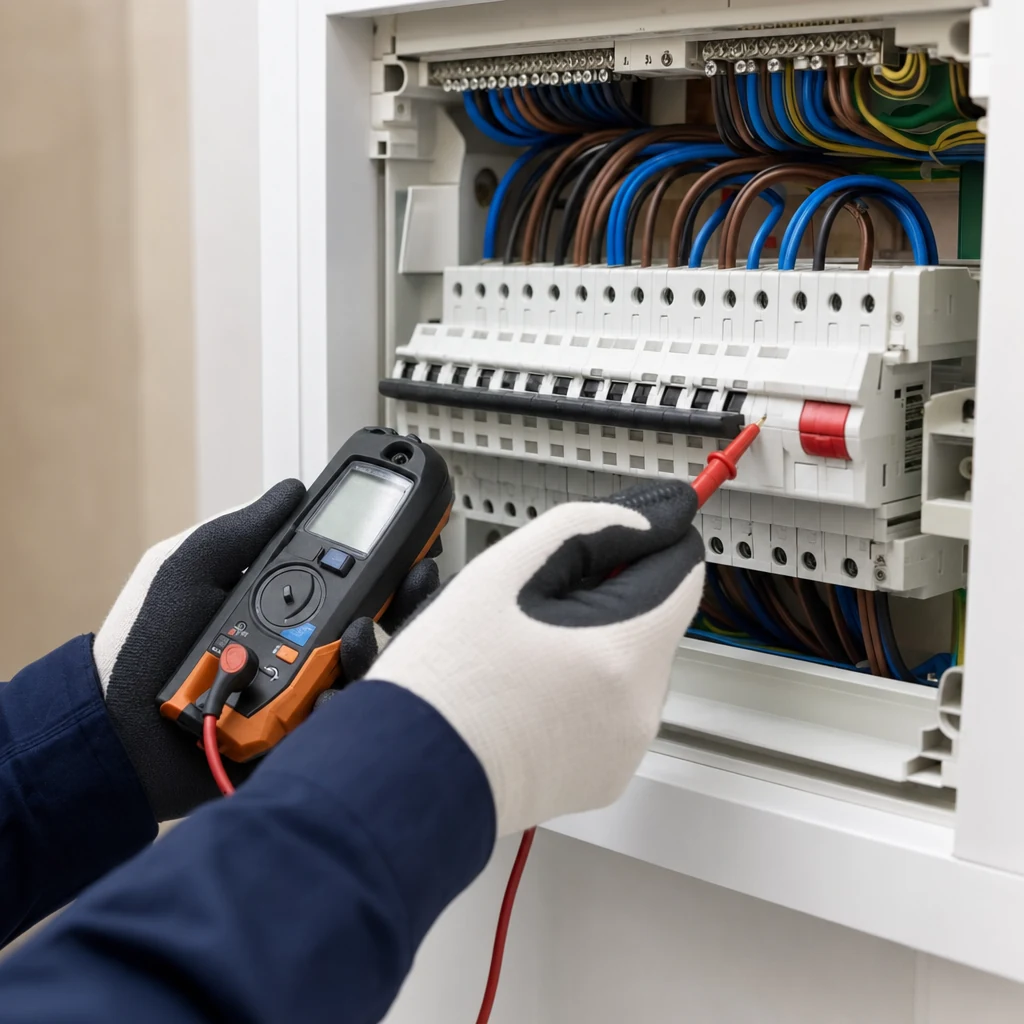
The consumer unit is usually the first major area an electrician checks. It distributes power around the property and contains devices designed to disconnect electricity if a fault occurs. During maintenance, the electrician will look at the overall condition, labelling, accessibility and whether the unit appears suitable for the installation it serves.
They will also check protective devices such as circuit breakers, RCDs and RCBOs where fitted. These devices are important because they help protect people and property from electric shock and fault conditions. The electrician may carry out professional testing to confirm they operate within expected limits.
Signs of overheating, damage, missing blanks, poor cable entry, overcrowding or unclear circuit identification are all important. A tidy, correctly arranged consumer unit makes future maintenance easier and helps reduce confusion during isolation or fault finding.
If improvements are needed, they can usually be planned in a clear and practical way, rather than treated as an emergency unless there is an immediate safety issue.
Sockets, switches, lighting and fixed accessories
Electrical maintenance includes a visual and, where appropriate, tested assessment of accessories around the home. This can include sockets, switches, light fittings, fused connection units, extractor fans, electric heaters and outdoor supplies.
The electrician checks for damage, loose fittings, signs of heat, cracked faceplates, exposed conductors, poor cable support and accessories that may not be suitable for their location. Outdoor equipment and areas with moisture need particular care, as the wrong accessory or a damaged seal can affect safety and long-term performance.
They may also consider whether there are enough socket outlets for how the home is used. Too many adaptors or heavily loaded extension leads can indicate that the fixed installation no longer matches everyday needs.
Where additional small works are required, services such as other electrical services can help homeowners improve convenience while keeping the installation neat and professionally finished.
Wiring condition, earthing and bonding
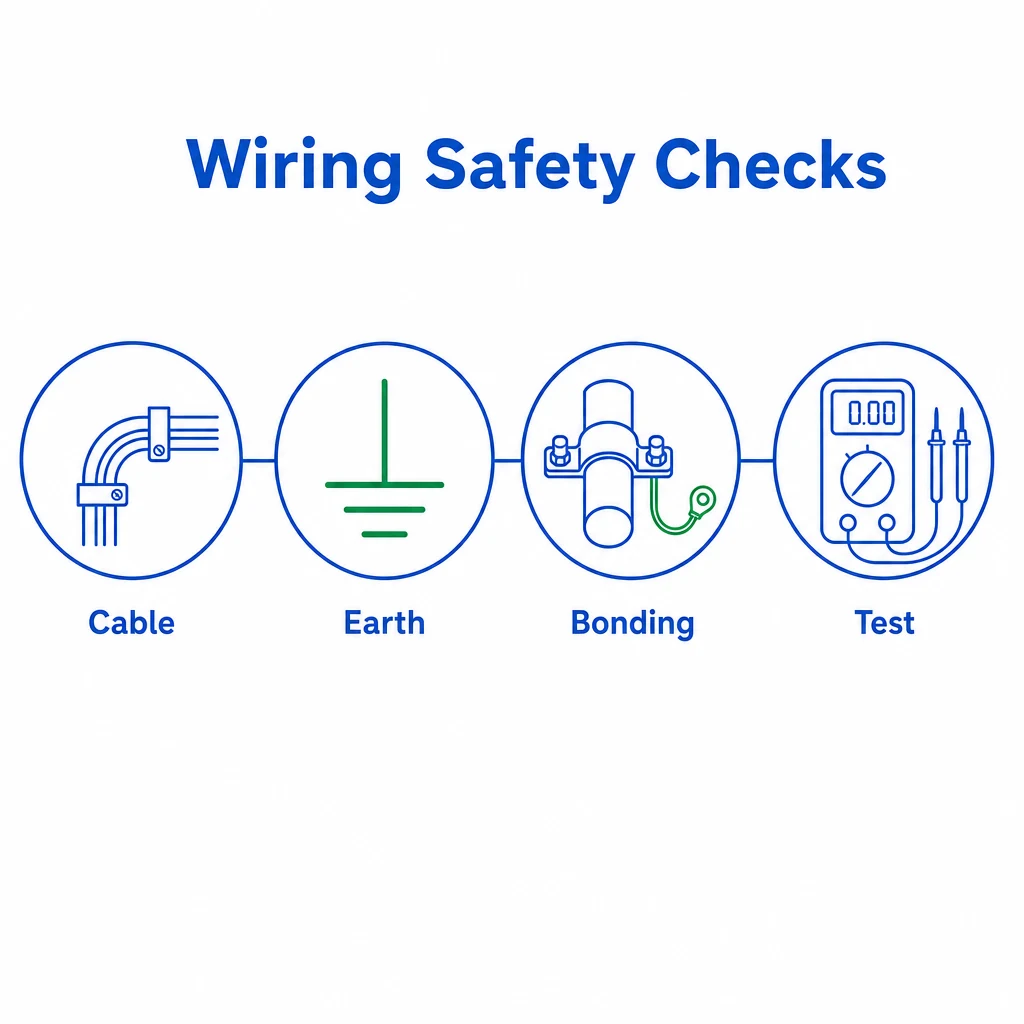
Some of the most important checks are not obvious from the surface. A qualified electrician assesses the type, age and condition of visible wiring, looking for damage, unsuitable alterations, poor terminations and signs that previous work may not have been completed to a good standard.
Earthing and bonding are also central to electrical safety. Earthing provides a path for fault current, while bonding helps reduce dangerous voltage differences between metal services and electrical parts. During maintenance, an electrician checks that these arrangements are present, correctly sized where visible and suitable for the installation.
Professional test instruments may be used to measure continuity, insulation resistance, polarity, earth fault loop impedance and RCD performance. These tests are not DIY checks; they require the right equipment, training and interpretation. The value is not just in taking readings, but in understanding what those readings mean for the safety of the whole installation.
Modern loads such as solar, batteries and EV charging

Many homes now include, or are preparing for, technology that changes how electricity is generated, stored and used. Solar panels, battery storage and electric vehicle charging can all be safe and reliable when designed and installed correctly, but they do add extra considerations during maintenance.
An electrician will look at how these systems interact with the existing installation, including circuit capacity, isolation, labelling, cable routes and protective devices. They will also check for neat, secure containment and signs that equipment has been installed in a way that can be safely maintained.
If you are considering future upgrades, maintenance can help identify what may be needed before adding solar installation, battery storage or EV charging. Looking at the wider installation first helps avoid guesswork and supports a cleaner final result.
You can also review completed projects in the case studies section to see the kind of tidy residential and light-commercial work that good planning can achieve.
Records, recommendations and next steps
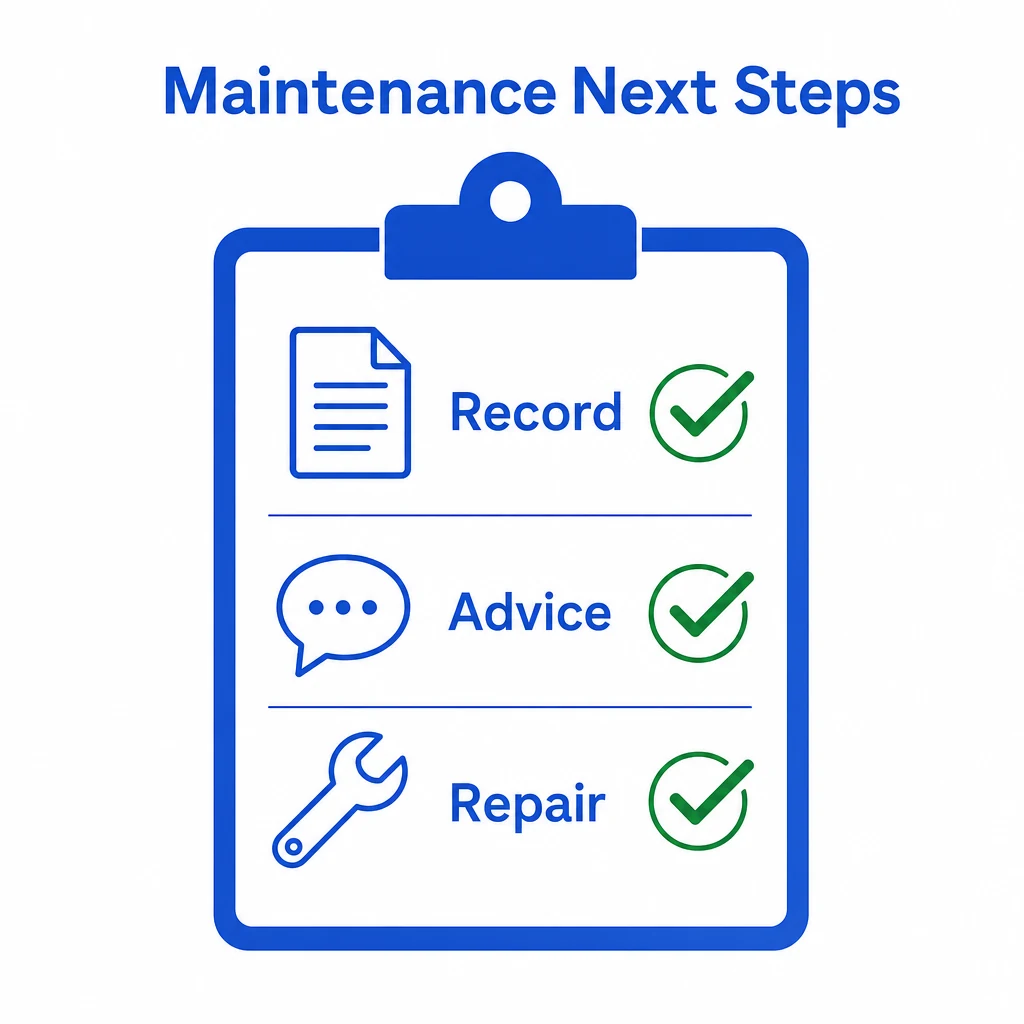
After an electrical maintenance visit, a good electrician should explain what has been checked and what, if anything, needs attention. Depending on the scope of the work, this may include formal test results, an Electrical Installation Condition Report or a simpler written summary for smaller maintenance tasks.
Recommendations should be clear and prioritised. Some items may be immediate safety concerns, while others may be sensible improvements or future upgrades. The aim is to help you make informed decisions, not to overwhelm you with jargon.
It is also worth asking questions during the visit. A professional electrician can explain why a particular issue matters, what the options are and how any remedial work would be approached safely. This makes electrical maintenance a useful part of looking after your property, not just a tick-box exercise.
- Electrical maintenance checks safety, reliability and the condition of the fixed installation.
- A qualified electrician will assess consumer units, protective devices, accessories, wiring, earthing and bonding.
- Professional testing requires specialist equipment and should not be treated as a DIY task.
- Maintenance is a useful step before adding solar, battery storage, EV charging or new circuits.
- Clear records and recommendations help homeowners plan any remedial work confidently.
Frequently asked questions
How often should a home electrical installation be checked?
There is no single answer for every home. The right timing depends on the age, condition and use of the property, plus whether any recent alterations have been made. A qualified electrician can advise a suitable maintenance routine.
Is electrical maintenance the same as an EICR?
Not always. An EICR is a formal inspection and testing report on the condition of an installation. General maintenance may be narrower, but it can identify whether a more detailed report is sensible.
Can an electrician check electrics before I buy a property?
Yes. Many buyers arrange an inspection to better understand the condition of the electrical installation before committing to future work or upgrades.
Should I book maintenance before installing an EV charger or solar panels?
It is often a good idea. Checking the existing installation first helps confirm whether the consumer unit, earthing and circuits are suitable for the planned upgrade.
Need a qualified electrician?
If you would like your home electrics checked or want advice before planning an upgrade, SLC Solutions can help with safe, tidy and professional electrical work.