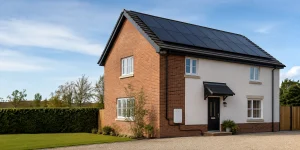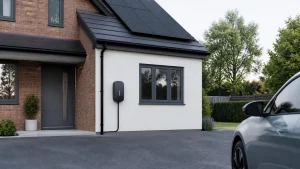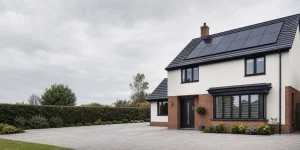
One of the first questions many homeowners ask before considering solar panels is a simple one: “Is my roof actually big enough?” It is a fair question.
From the ground, it can be difficult to judge how many panels will fit, especially when chimneys, skylights, vents and awkward roof shapes are involved.
The amount of roof space you need for solar panels depends on several things, including your energy usage, the size and efficiency of the panels, the direction your roof faces, shading and whether you may want battery storage or an EV charger in the future.
A rough estimate can be helpful, but a proper solar survey is usually the most effective way to determine what will work best for your home.
Why Roof Space Matters for Solar Panel Installation
Roof space matters because your solar panels need a clear, suitable area where they can safely sit and generate electricity throughout the day.
A larger roof may allow for more panels, but size alone is not the only thing that counts. The usable part of the roof is what really matters.
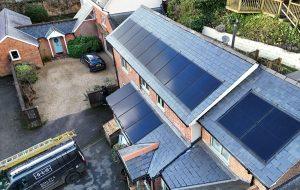
Not every section of a roof will be suitable for solar panels. Chimneys, roof windows, vents, dormer windows and shaded areas can all reduce the amount of space available.
A good solar panel installation is not simply about fitting as many panels as possible. It is about designing a system that suits the property, works safely and makes sense for the way the household uses electricity.
How Much Space Does One Solar Panel Need?
Most modern domestic solar panels are roughly around 1.7 metres long by 1 metre wide, although the exact size can vary depending on the panel type and manufacturer.
This means each panel needs a little under 2 square metres of space, before allowing for any gaps, mounting equipment or safe access around the installation.
Panel efficiency also plays a part. Some newer panels can produce more power from a similar amount of roof space, which may be useful for homes where space is limited.
This is why two roofs of a similar size may not always end up with the same solar design. The panel choice, layout and available roof area all need to be considered together.
How Many Solar Panels Does the Average Home Need?
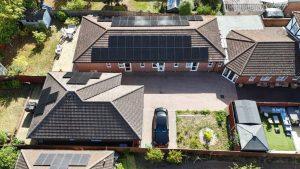
Many UK homes may need somewhere around 8 to 12 solar panels, but this should only be treated as a guide.
A smaller property with modest electricity usage may need fewer panels, while a larger family home, a home office, or a property with higher daytime energy use may benefit from a bigger system if the roof space allows.
It also depends on what the homeowner wants from the system. Some people want to reduce their electricity bills as much as possible, while others may be looking ahead to battery storage or electric vehicle charging.
A solar installer will usually look at your electricity usage, roof size and plans before recommending the right number of panels.
What Type of Roof Is Best for Solar Panels?
In the UK, south-facing roofs are often considered ideal because they tend to receive strong levels of daylight across the day.
That said, east and west-facing roofs can still work well, particularly for households that use electricity in the morning or later in the afternoon. The best option depends on the property and how the electricity is likely to be used.
The angle of the roof is important too. Pitched roofs are common for domestic solar installations, while flat roofs may need angled mounting systems to help the panels sit correctly.
Garages, extensions and outbuildings may also be suitable in some cases. North-facing roofs are usually less effective, but it is still worth having the property assessed rather than ruling it out straight away.
What Can Reduce the Amount of Usable Roof Space?
A roof can look large from the outside, but once the details are checked, the usable space may be smaller than expected.
Chimneys, skylights, dormer windows, pipe vents, aerials and satellite dishes can all affect where panels can be placed. In some cases, these features may split the roof into smaller sections, which makes the layout more limited.
Shading is another big factor. Trees, neighbouring buildings, roof features and even nearby extensions can cast shadows across part of the roof at different times of day.
A solar installer will look at these details carefully because a panel layout that looks fine on paper may not perform as well if a key section of the roof is shaded.
Does Shading Make a Big Difference?
Shading can make a noticeable difference to solar performance, especially if it affects the panels during the brighter parts of the day.
Even partial shading from a chimney, tree or nearby property may reduce the amount of electricity a system can generate. It does not always mean solar panels are unsuitable, but it does need to be planned around.
A professional survey can help identify where shading is likely to be a problem and which sections of the roof are most suitable. In some cases, the system design may be adjusted to avoid shaded areas.
Equipment such as optimisers may also be recommended where suitable, although this depends on the property, budget and expected benefit.
Can You Still Have Solar Panels on a Small Roof?
A small roof does not automatically mean solar panels are not worth considering. A smaller system may still help reduce electricity bills, especially if the household uses a good amount of electricity during the day.
For some homes, even a compact solar panel installation can make a practical difference over time.
The key is designing the system around the space available, rather than forcing an unsuitable layout. Higher-efficiency panels may be worth considering where roof space is limited.
Battery storage may also help some households make better use of the electricity they generate, although whether it is worthwhile will depend on daily usage patterns and budget.
Roof Space and Battery Storage: Do You Need More Panels?
Adding battery storage does not always mean you need more roof space, but it can influence the ideal system size.
A battery is designed to store unused solar energy so it can be used later, often in the evening when the panels are no longer generating as much electricity. For that to work well, the system needs to generate enough spare energy to charge the battery.
This is where careful system design matters. If a homeowner is also thinking about installing an EV charger, working from home more often, or using more electricity in the future, the installer may recommend a larger system where roof space allows.
The aim is to balance solar generation, household demand and storage capacity, rather than simply adding the biggest battery possible.
What Happens During a Solar Roof Survey?
A solar roof survey helps work out how many panels can realistically be installed and how much electricity the system may be expected to generate.
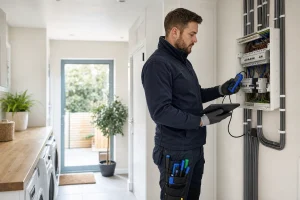
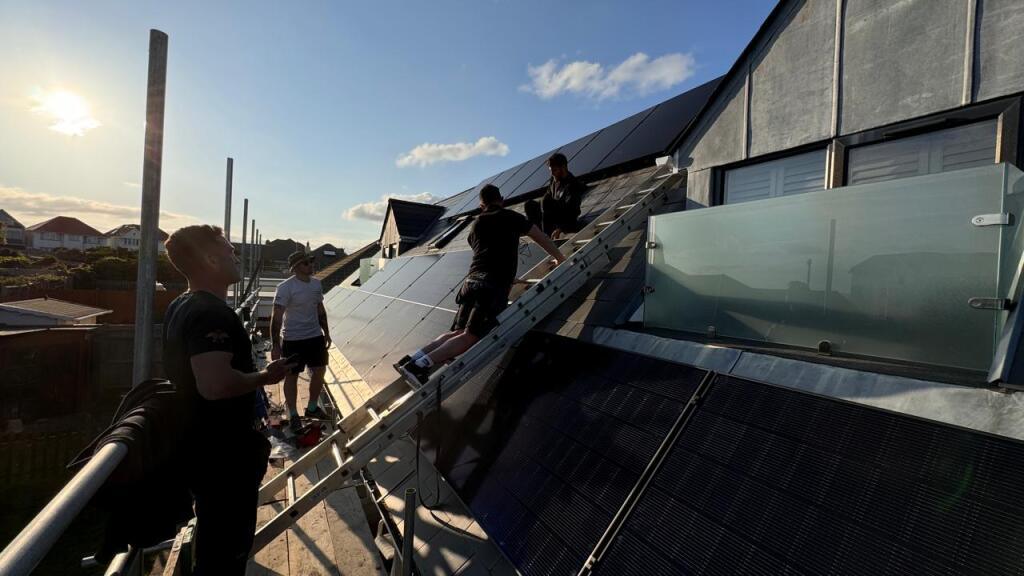
The survey will usually look at the size of the roof, its condition, direction, pitch and any shading that could affect performance. It may also include a check of the existing electrical setup.
The installer will also want to understand how much electricity the property uses and whether the homeowner is considering extras such as battery storage or EV charging.
This is where the estimate becomes much more accurate. Instead of guessing from the ground, the survey gives a clearer picture of what is possible and what type of system would suit the home.
Is Your Roof Strong Enough for Solar Panels?
Roof condition is an important part of any solar panel installation. Most suitable roofs can support solar panels, but older roofs, damaged tiles or structural issues may need to be looked at before work begins.
It is better to identify these things early, rather than finding out once the installation is underway.
This does not mean every older property is a problem. Many homes are still perfectly suitable for solar panels, even if they need a little care during the planning stage.
A proper assessment can help check whether the roof is in good enough condition and whether any repairs should be carried out before the panels are installed.
What If Your Main Roof Is Not Suitable?
If the main roof is too small, too shaded or awkwardly shaped, there may still be other options.
Garage roofs, extensions and outbuildings can sometimes be used for solar panels, provided they have enough space, the right structure and a reasonable amount of daylight.
Flat roof mounting systems may also be suitable for some properties.
In certain cases, ground-mounted solar panels may be an option, although this depends on the amount of available land and the layout of the property.
A smaller system may also be designed around the most suitable section of the roof. The important thing is to look at the property as a whole, rather than assuming the main roof is the only choice.
How to Get an Accurate Solar Panel Roof Space Estimate
The best way to know how much roof space you need is to speak with an experienced solar installer. They can assess your property properly, look at your energy usage and recommend a system that fits both the roof and your needs.
Online estimates can be useful at the start, but they cannot always account for shading, roof features or the condition of the property.
At SLC Solutions, we can help homeowners understand whether their roof is suitable for solar panels and what type of system may work best.
Whether you are considering solar panels on their own, solar with battery storage, or a setup that supports future EV charging, a tailored survey is the most reliable place to start.
Final Thoughts
There is no single answer to how much roof space you need for solar panels because every home is different.
The number of panels, panel efficiency, roof layout, shading, direction, pitch and your electricity usage all affect the final design. A roof that looks limited may still work well, while a large roof may have obstacles that reduce the usable area.
If you are unsure whether your roof is suitable, the most sensible next step is to arrange a solar survey.
This gives you a clear idea of what can be installed, how the panels may perform and whether battery storage or EV charging could be included now or in the future.