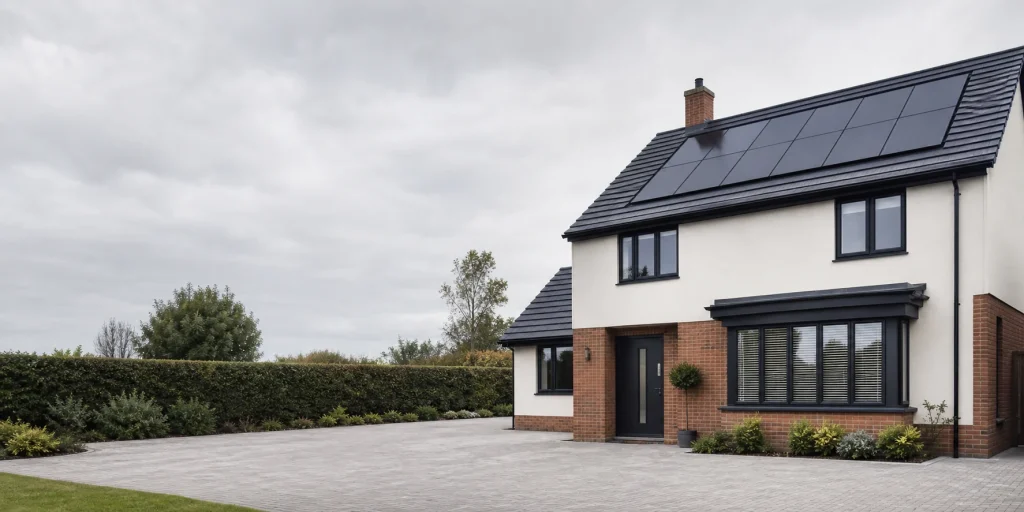
If you are thinking about solar panels, it is natural to assume they will keep your home running whenever the sun is shining, even during a power cut. The reality is a little more nuanced.
Most solar panel systems are designed to work with the electricity grid, not replace it. That is where battery storage and the right backup setup can change what happens when the power goes off.
Why standard solar panels usually stop in a power cut
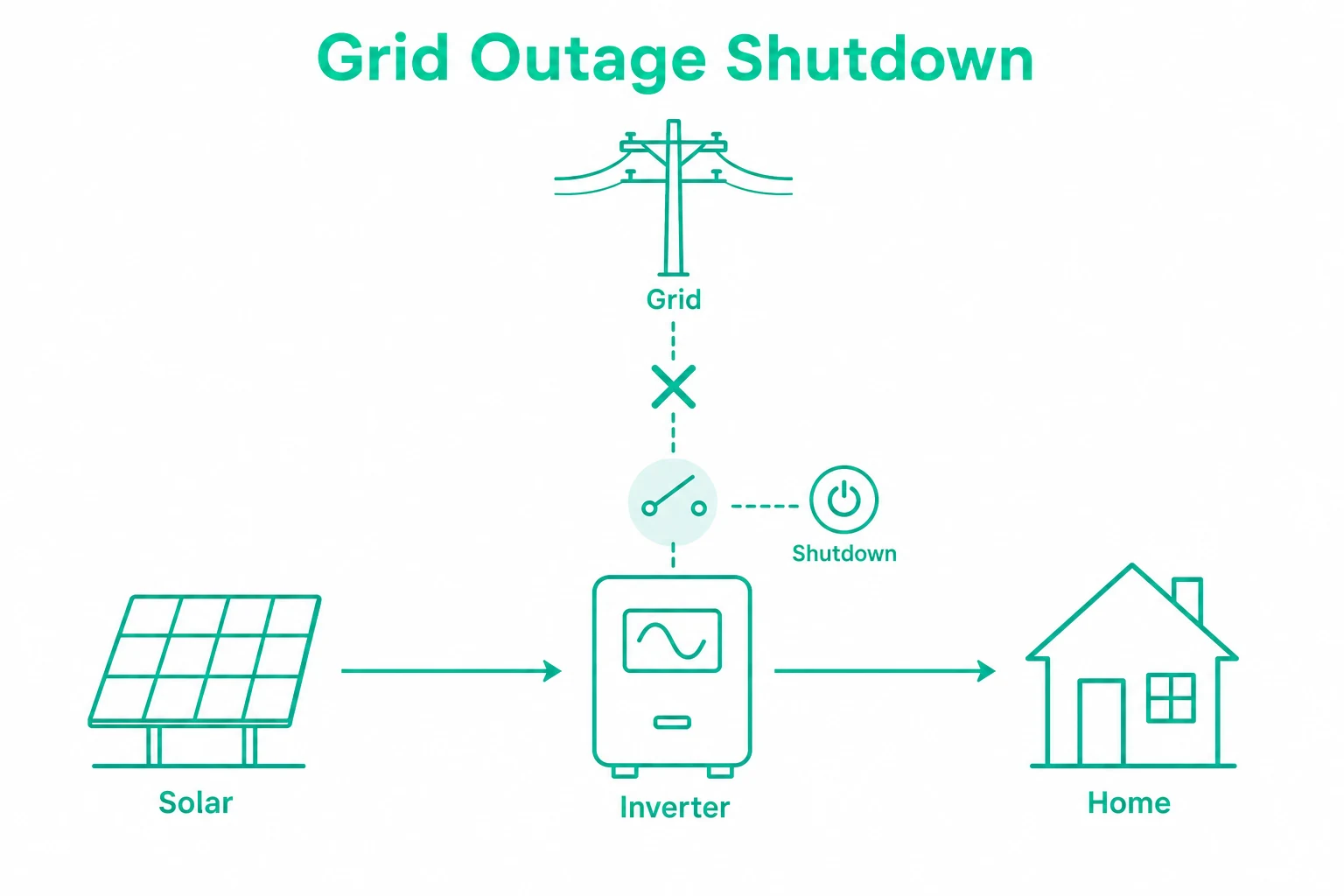
A typical home solar system is connected to the electricity grid. During normal operation, your panels generate electricity, your home uses what it needs, and any surplus can be exported depending on your setup. This is efficient, simple and well suited to everyday use.
During a power cut, however, most grid connected solar systems automatically shut down. This surprises many homeowners, because the panels themselves may still be capable of generating electricity. The reason is safety.
If the grid is down, engineers may be working on the network. A solar system that continued to push electricity into the grid could create a hazard. To prevent this, inverters are designed to detect a grid failure and stop exporting power. This protective feature is often called anti islanding.
In plain terms, solar panels alone do not usually mean your home has backup power. They reduce reliance on grid electricity day to day, but a standard setup still needs the grid to be present before it can operate.
What actually happens when the power goes off
When a power cut happens, your inverter responds very quickly. In most standard systems, it disconnects the solar generation from your home and from the grid. Your appliances then lose power in the same way they would in a home without solar panels.
This does not mean your solar panels are unreliable. It means they have been installed to operate safely within a grid connected electrical system. Solar generation is dependable when designed and installed correctly, but reliability in normal use is not the same as backup capability during an outage.
This distinction matters because it affects expectations. If your main goal is to reduce electricity bills and use more renewable energy, solar panels on their own can be a strong option. If your goal includes keeping essential circuits running when the grid is unavailable, you need to look at battery storage and backup features as part of the system design.
If you are comparing solar performance through the year, SLC Solutions has also covered what to expect from solar panels in winter, which is useful when thinking about generation in different conditions.
How battery storage changes the picture
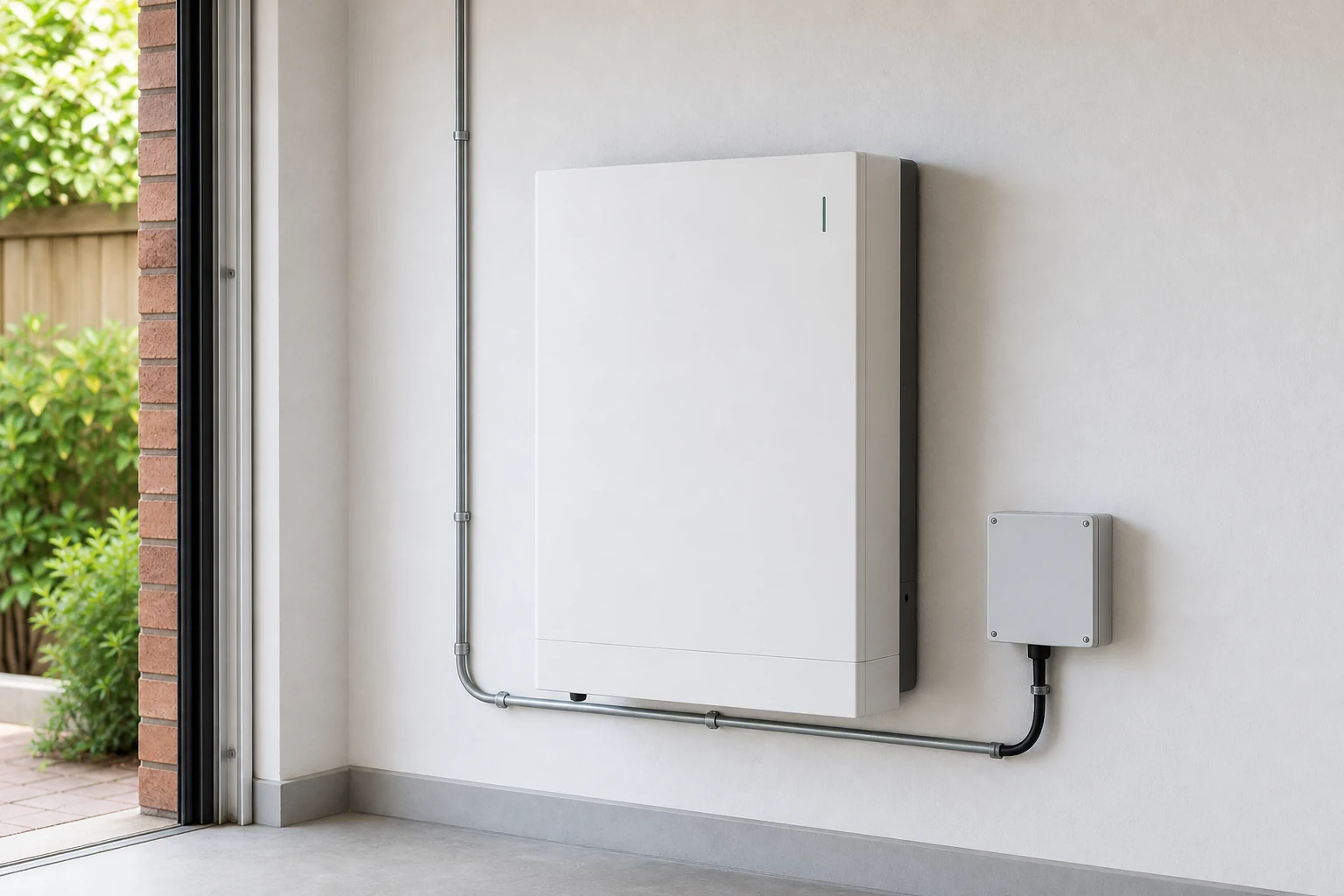
A solar battery stores surplus electricity generated by your panels, so you can use more of your own energy later. That might be in the evening, overnight, or at times when your panels are producing less than your home is using.
Battery storage can also be part of a backup power arrangement, but this depends on the battery, inverter and installation design. Not every battery system automatically powers your home during a power cut. Some are built mainly for everyday energy management, while others can support selected circuits or a larger part of the property when configured for backup operation.
With the right equipment, a battery can form a controlled, separate supply for your home during an outage. This means the system isolates from the grid, then powers chosen loads from stored electricity and, where compatible, solar generation. The details matter, because the system must remain safe, compliant and matched to how the home uses electricity.
For homeowners who want to make better use of solar generation and understand backup options, SLC Solutions explains its approach to battery storage for solar panels in more detail.
What a battery can and cannot power during an outage
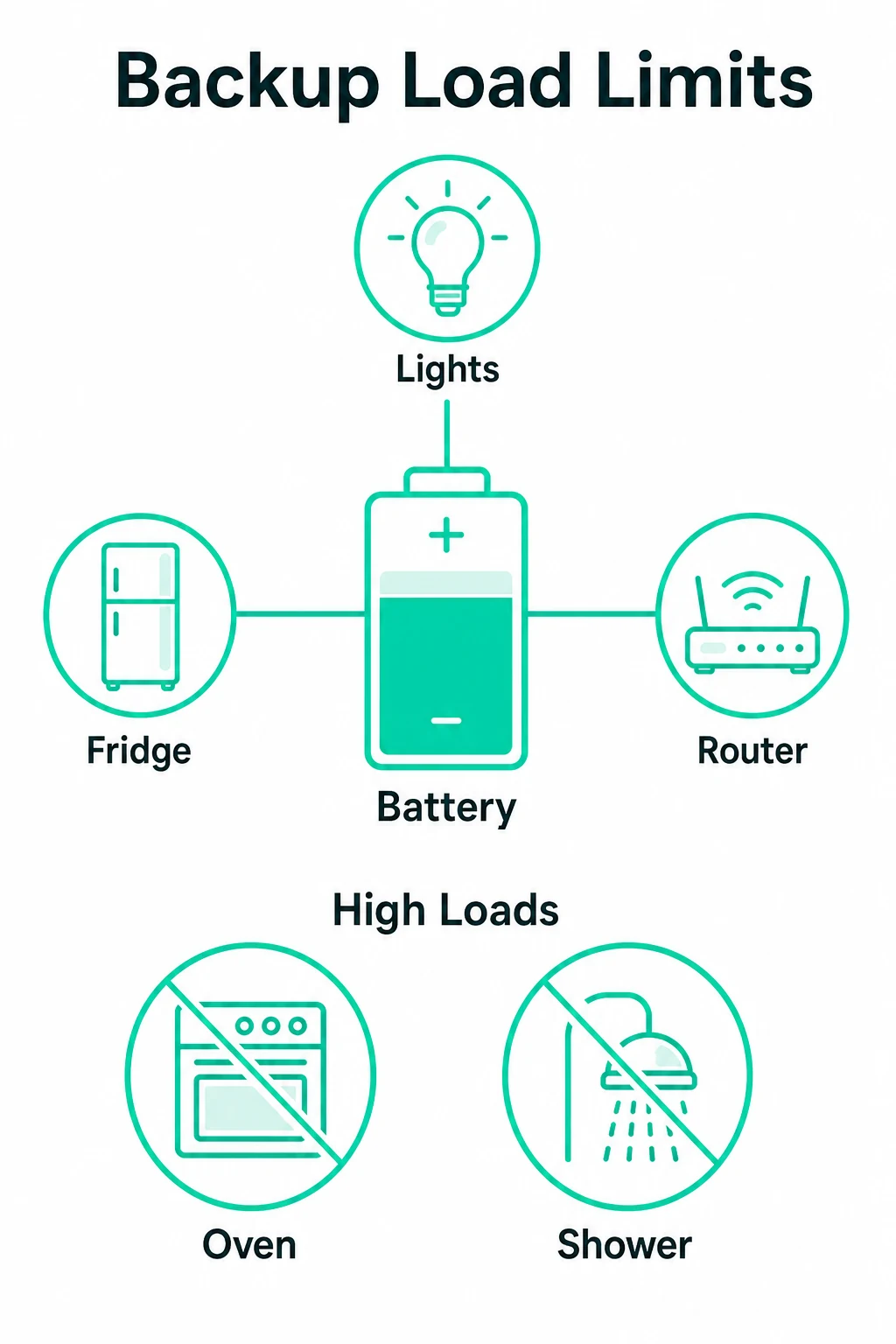
The amount a battery can support depends on its usable capacity, its output rating, the charge level when the power cut begins, and which appliances are connected to backup circuits. This is why a proper design conversation is so important.
Many households focus backup power on essentials. These might include lighting, internet equipment, refrigeration, heating controls, a few sockets, or a home working setup. Larger loads, such as electric showers, ovens, immersion heaters and some vehicle charging arrangements, may not be suitable for backup use unless the system has been specifically designed for them.
A good installer will not simply ask how many panels you want. They will look at how your home uses electricity, what you want to keep running, how often you are likely to need backup, and how solar generation and stored energy can work together.
There are a few useful questions to ask before choosing a battery:
- Do you want the battery mainly for everyday solar savings, power cut support, or both?
- Which circuits or appliances would matter most during an outage?
- Does the battery system support backup operation?
- Will the system recharge from solar while isolated from the grid?
- How will the setup behave when grid power returns?
If you are at the sizing stage, this guide to choosing the right solar battery size for your home is a helpful next step.
Can solar panels recharge a battery during a power cut
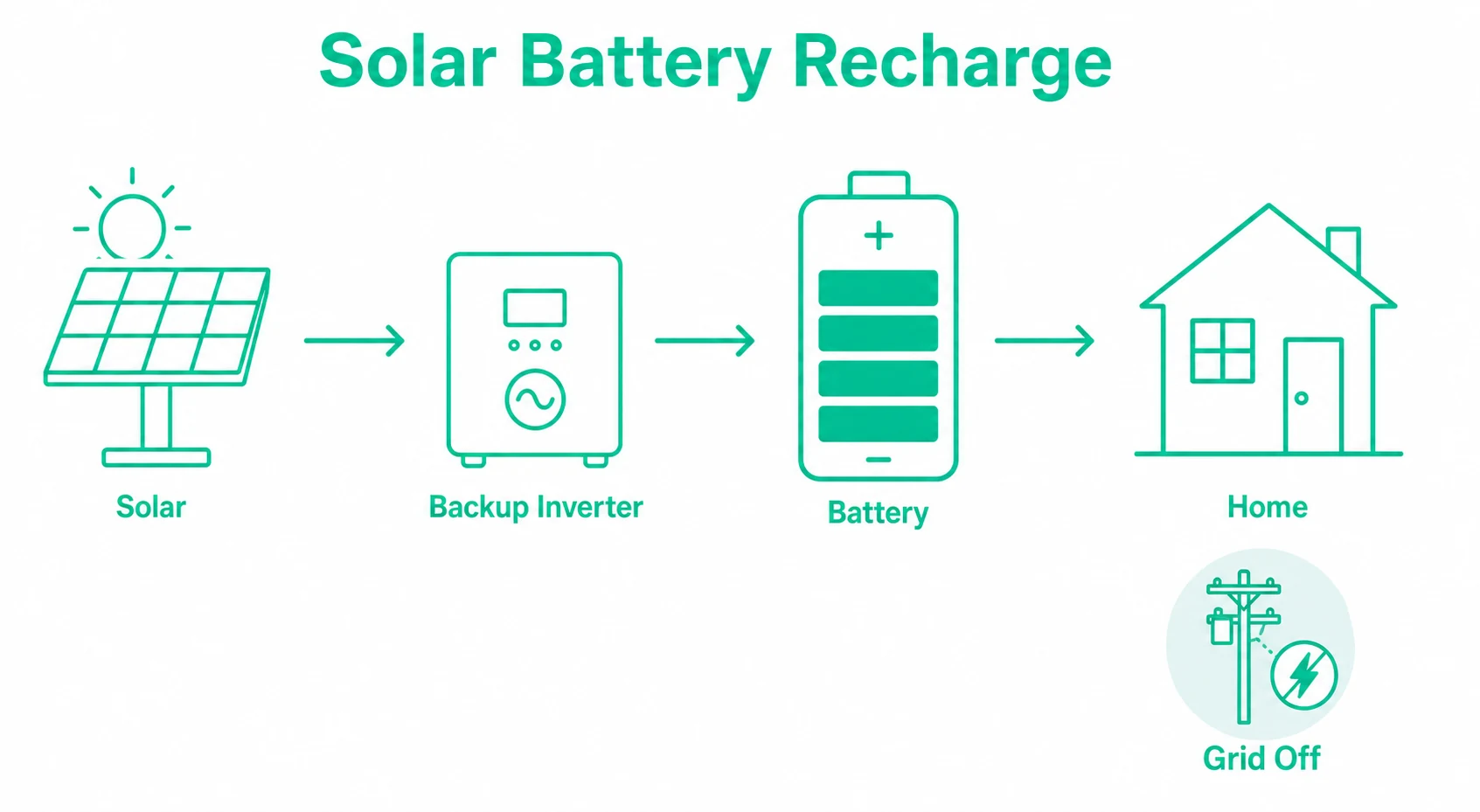
Sometimes, yes, but it is not something to assume. Whether your panels can continue charging a battery during a power cut depends on the inverter, battery system and backup configuration.
Some systems can create a temporary home energy supply that allows solar panels to keep contributing while the grid is unavailable. Others can only provide stored battery energy until the battery reaches its limit. In that case, the solar panels may not recharge the battery until grid power has returned.
This is where clear specification matters. If backup power is important to you, say so at the start of the project. It affects product choice, wiring design and how circuits are arranged. It can also influence whether you choose whole home backup, selected circuit backup, or a more focused essential load setup.
The best result is a system that matches real life use. For some homes, that means maximising solar self consumption and reducing grid reliance. For others, it means adding resilience so important parts of the home can continue running when the grid is unavailable.
What to discuss before installing solar and battery storage
Before choosing a system, it is worth being clear about your priorities. Solar panels, battery storage and EV charging can work together very effectively, but the design should reflect how you live and what you expect from the technology.
If backup power is part of your decision, ask your installer to explain the difference between normal battery operation and backup operation. Ask what will stay powered, what will not, and what happens if the battery is empty when the outage begins. A trustworthy answer should be practical and specific to your property, not vague or overly optimistic.
You should also ask how the system will be installed safely with your existing consumer unit, circuits and electrical load. This is especially important if you already have or plan to add EV charging, electric heating, or other significant electrical demand.
Battery storage is not just an add on box. It is part of a wider electrical system, and the quality of the design and installation affects how well it works. SLC Solutions also explains how batteries can boost your solar with battery power if you want a broader view of the benefits beyond outage support.
- Standard grid connected solar panels usually shut down during a power cut for safety reasons.
- Solar panels can be reliable in everyday use without automatically providing backup power.
- Battery storage can support outage resilience, but only when the system is designed for backup operation.
- The right setup depends on which circuits and appliances you want to keep running.
- A professional design should cover solar generation, battery capacity, inverter capability and safe isolation from the grid.
Frequently asked questions
Do solar panels work during a power cut?
Most standard grid connected solar panel systems stop working during a power cut. This is a safety feature that prevents electricity being sent into the grid while it may be under repair.
Will a solar battery automatically power my home in an outage?
Not always. Some batteries are designed mainly to store solar energy for later use, while others can provide backup power when installed with the right inverter and wiring arrangement.
Can I run my whole home from a battery during a power cut?
It depends on the battery capacity, output rating, charge level and electrical loads in the property. Many systems are designed to support essential circuits rather than every appliance.
Should I mention power cuts before getting a solar battery quote?
Yes. If backup power matters to you, raise it early. It can affect the battery, inverter, circuit design and the way the system is installed.
Planning solar with battery storage?
SLC Solutions can help you understand what solar and battery storage can realistically do for your home, including everyday energy use and backup options during power cuts.